I will admit immediately that this is not one of my more classroom applicable baking endeavors. However, it does relate back to a key goal in starting this inquiry project; I said I would work on stepping outside my comfort zone and try new recipes and techniques, a skill that I need to strengthen and that is quite relevant to teaching.
So what is pomegranate molasses? Have you heard of this elusive ingredient? I certainly had not. It started with one of my roommates, Ash, sitting on my bed. I believe I was doing my makeup before we went on our daily Starbucks run. He was itching to bake a cake. Ash bakes frequently, they get this itch often. We were wanting a complex flavor and I cannot recall why exactly pomegranate of all things was the choice here, but it was! Ash found a recipe for pomegranate cake, and we decided to put a pomegranate curd as the filling, with cinnamon icing. Does that not sound positively delectable.
We then go find a recipe for pomegranate curd, and they all call for pomegranate molasses. After some very brief research, it seems pomegranate molasses is achieved by buying pomegranate juice, adding lemon juice and sugar, and reducing these together for about an hour until much of the liquid has burned off and a thickened syrup is produced.
The Recipe
I used Lisa Lin’s recipe from her blog Healthy Nibbles by Lisa Lin, linked below:
https://healthynibblesandbits.com/pomegranate-molasses
Ingredients
- 4 cups pomegranate juice
- 1/2 cup + 2 tablespoons sugar
- 1/4 cup lemon juice, about one large lemon
Instructions:
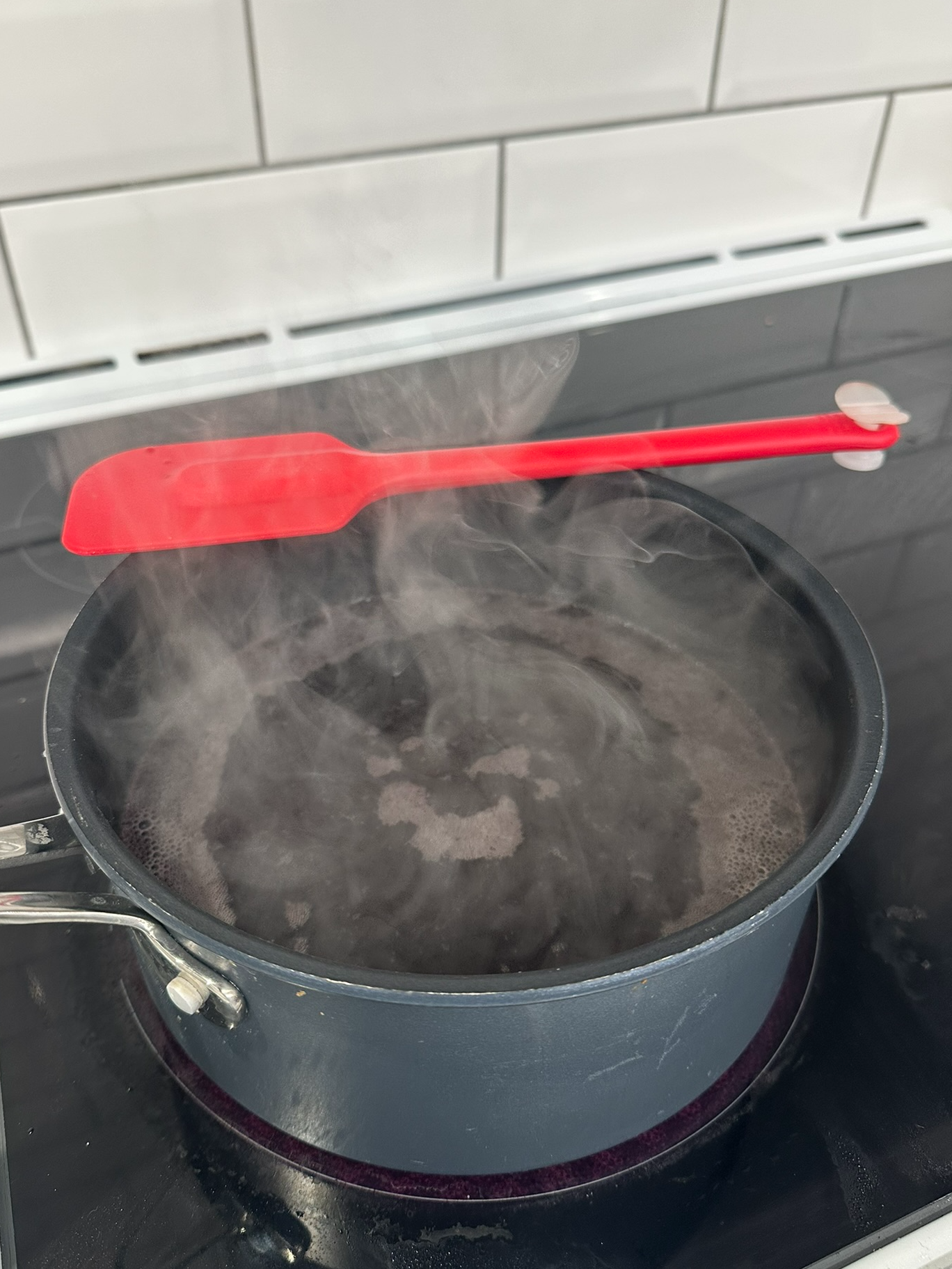
- Boil the pomegranate juice, sugar, and lemon juice in a saucepan over medium-high heat. When the juice boils, reduce the heat to a medium-low. You should see the liquid boiling very gently in the middle.
- Let the mixture simmer for about an hour, uncovered. Stir occasionally to make sure that the sugars don’t stick to the bottom of the saucepan.
- After 45 minutes of simmering, you’ll notice that a lot of liquid has burned off. Reduce the heat very slightly and let it simmer for another 15 minutes or so. Take a spoon and dip it into the molasses. If it coats the spoon, the molasses is done cooking (see photo in blog post for a visual).
- Turn off the heat and let it cool for 30 minutes before pouring it into a jar. The mixture will still be runny, but don’t worry. The molasses thickens as it cools.
- This recipe should yield about 1 cup and 2 tablespoons of pomegranate molasses. Store the molasses in the refrigerator for up to 6 months.
The Final Product
So oops, I do not have a great photo of the finished molasses. It did exist for a time, I promise! Ash was obsessively stirring it and checking on while I was doing another kitchen task the entire time it cooked, which was a little bit funny. They get very engrossed in baking and rather impatient. Their cakes were in the oven while I was molasses-ing. I had a fantastic time teasing them every time they would go fiddle with the heat or give it a stir unnecessarily. With love, of course.
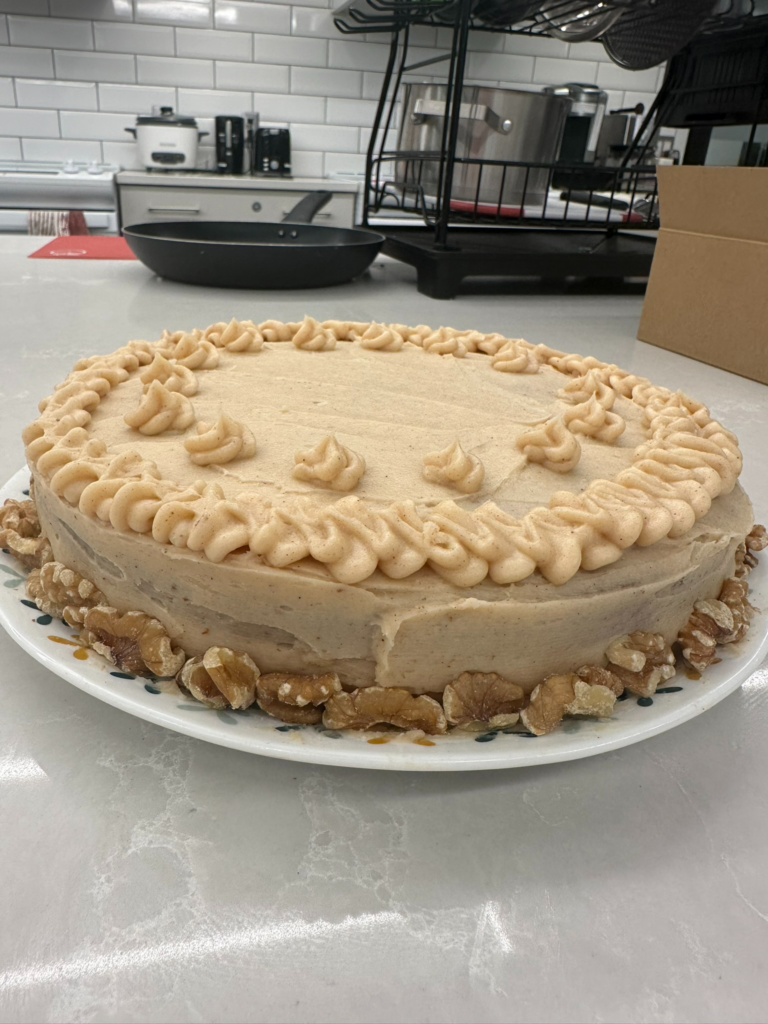
The cakes came out, the molasses cooled, and then we made the curd, though I became an assistant at that point. I managed to score a good picture of the cake that the fruits of my labors contributed to, which I say counts for something. I am not a particular fan of pomegranate, and would not have anticipated the cinnamon icing being the ideal pairing to it, but oh my goodness that was a very fun cake to eat. We finished the cake quest at 12:30am, yet the cake was gone by morning. The joy of dorms. We even got the Andrew stamp of approval, which is a badge of honor considering that man lacks a sweet tooth and is therefore picky with his desserts.
Sorry, but comments are not enabled on this site.