This recipe was sparked by my roommate Emiika. I frequently make us caesar salad for dinner. It is fantastic, if I do say so myself. A couple weeks ago they add an additional request: “Could you also maybe make lemonade please?” Now initially I am confused because friend, me and what army. Does one casually just make lemonade in their kitchen? Well apparently so. Emiika tells me “You know, just with lemon juice and sugar and water.” This sounds so normal in practice but in theory was just not something I realized people did unless they were making a big batch for a specific purpose. My DIY lemonade recipe was as follows:
Ingredients:
- however much sugar your heart desires
- about double the lemon juice as the sugar
- ice
- however much tap water it takes to fill the cup after you add everything else
Procedure:
- Fill the bottom inch of your cup with as hot of water as the tap will dispense
- add spoonfuls of sugar, stir to dissolve
- double the lemon juice
- add ice
- fill the cup the rest of the way with very cold tap water
- Enjoy!
Here’s the thing, not really a recipe. It also gets somewhat tedious to do every time, and is terribly inconsistent. Therefore, I decided to make lemon syrup, which would disperse into the cold water evenly and be a one step process!
Lemon Syrup
I used Dini Kodippili’s recipe from TheFlavorBender.com, linked below:
https://www.theflavorbender.com/best-lemon-syrup-recipe/
Ingredients:
▢360 mL lemon juice strained (1.5 cups)
▢120 mL lemon juice strained (½ cup)
▢350 g white sugar 1 ¾ cups (add 400 g / 2 cups if you want to make it sweeter)
Process:
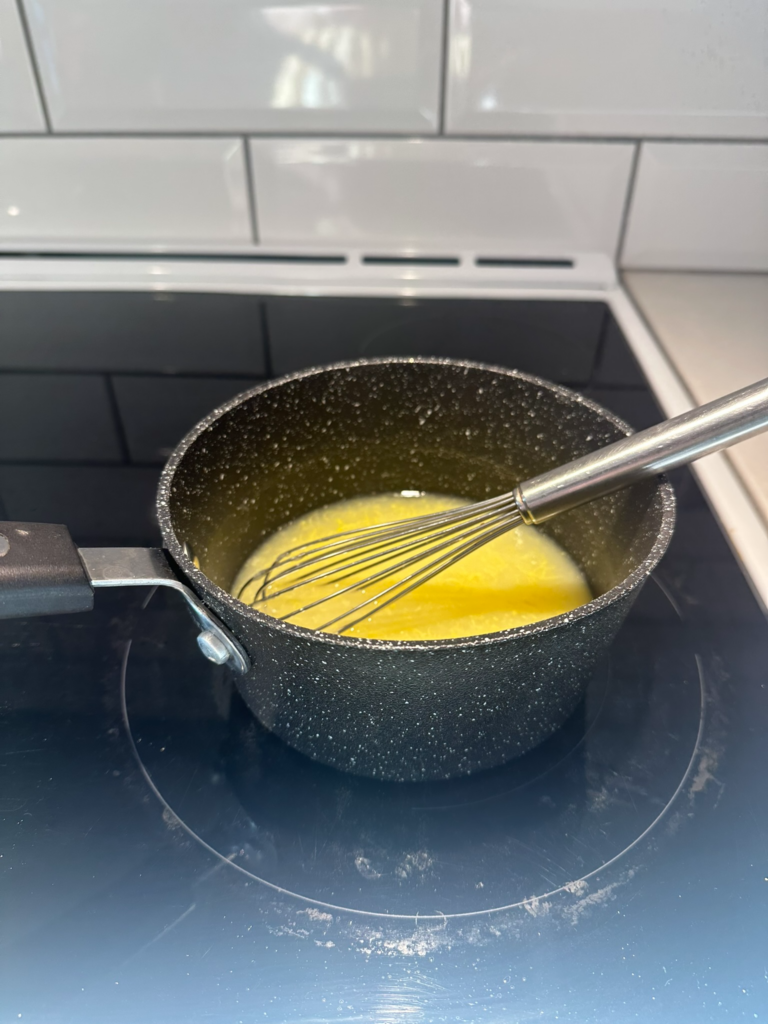
- Place the 360 mL / 1.5 cups of lemon juice in a small or medium-sized pot, along with the sugar.360 mL lemon juice,350 g white sugar
- Heat over medium heat while stirring to dissolve the sugar.
- When the sugar has dissolved, keep cooking the syrup until it comes to a boil.
- Reduce the heat to low, and let the syrup very gently simmer (without the lid) for about 8 – 10 minutes. The syrup should thicken during this time. The cooking time will depend on the pot that you use and the heat of your stove.
- When the syrup has thickened, remove the pot from the heat and stir in the 120 mL / ½ cup of lemon juice.120 mL lemon juice
- Let the syrup completely cool to room temperature and transfer to a clean and dry jar or container with an air-tight lid.
- Store in the fridge until you’re ready to use it for your drinks.
The Final Product
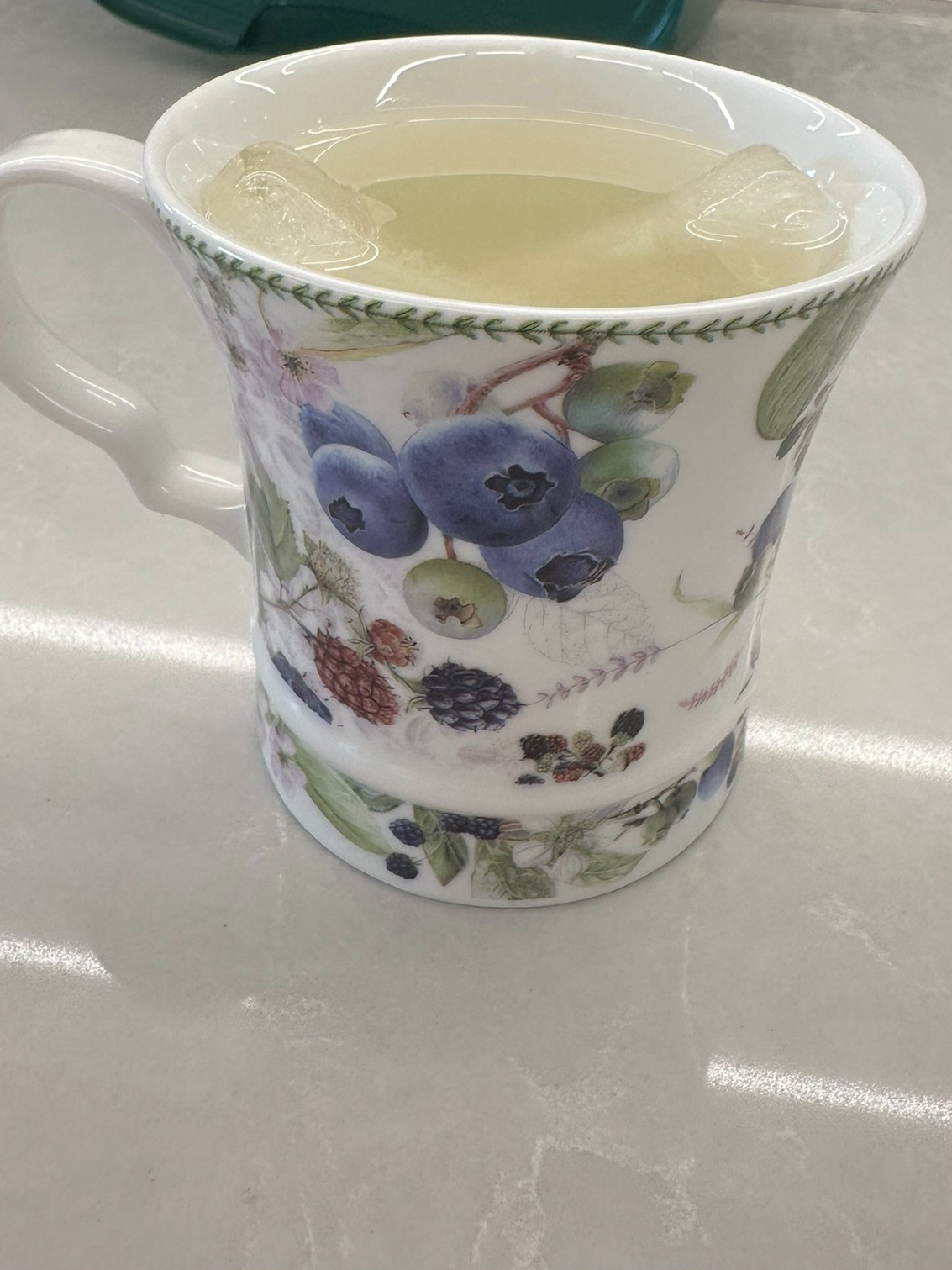
Once the syrup was finished, I strained it and added it to a container. Personally, I was quite pleased with it. I used it to make an exorbitant amount of lemonade, most of which I drank independently, some of which I used to make lemonade for Emiika, and it is also absolutely fantastic in mixed drinks.
CONFESSION: Emiika revealed to me last night, after we had gone through all the syrup, that it was not lemony enough for their palate and they preferred the old fashioned way. So the entire effort was all for naught, and I find that quite amusing. Even more so because I would usually add extra lemon juice to Emiika’s when I was using the syrup, yet their heart still yearned for greater citrus.
Reflections:
I considered a few different ways this could be pedagogically relevant.
- Do an experiment with students (at about a 7th grade level) who are learning about solutions, solvents, and solutes, and the way temperature affects solutions. Students could make their own simple syrups (experiment with flavors like lemon, lavender, blueberry, some of which require more straining than others). They could try creating these syrups with cold water vs cooking them, and seeing how effectively the sugar dissolves and becomes a syrup. Students would be able to observe how the higher temperature gives water molecules more kinetic energy, causing them to move faster and collide with sugar crystals more frequently and violently, which is why the syrup comes together better that way. As an added treat, students can use ice, water, and their syrups to make fun drinks at the end of the lesson.
- Use the process of making lemonade, without the syrup that is, for a procedural writing activity. Discuss the steps as a class, perhaps demonstrate, and then give them an age appropriate template for describing the steps. This activity is easily adaptable depending on in how in depth you would like to go. Afterwards, the teacher could try following the students instructions incredibly literally. Generally, students leave out the minor details they assume to be common sense, and find it very funny when the teacher does not just “know” to do these things. This would lead to some very wonky lemonade and shows students the importance of being very clear and specific in their procedural writing.
Sorry, but comments are not enabled on this site.